What's inside
Everything you need to govern a golden record — nothing you don't.
miniMDM ships the primitives that serious master-data work actually requires. No vendor upgrades, no per-seat licensing, no modules to buy separately.
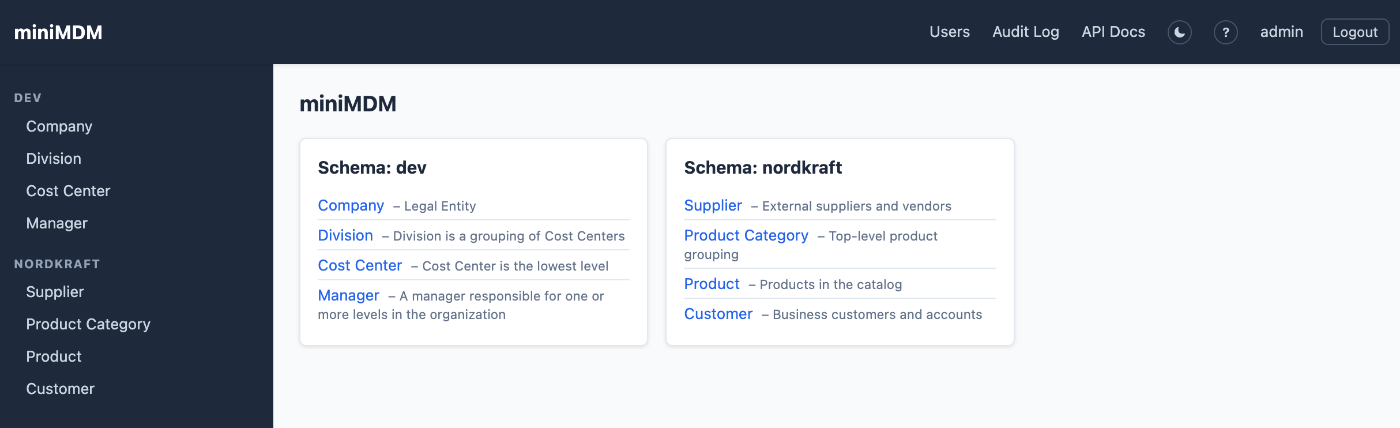
Schema as code
Define every data object — fields, types, references, required flags — in a single YAML or JSON config file. Assign an owner and steward to each object for governance accountability. Version it in Git alongside the rest of your infrastructure.
Full record versioning
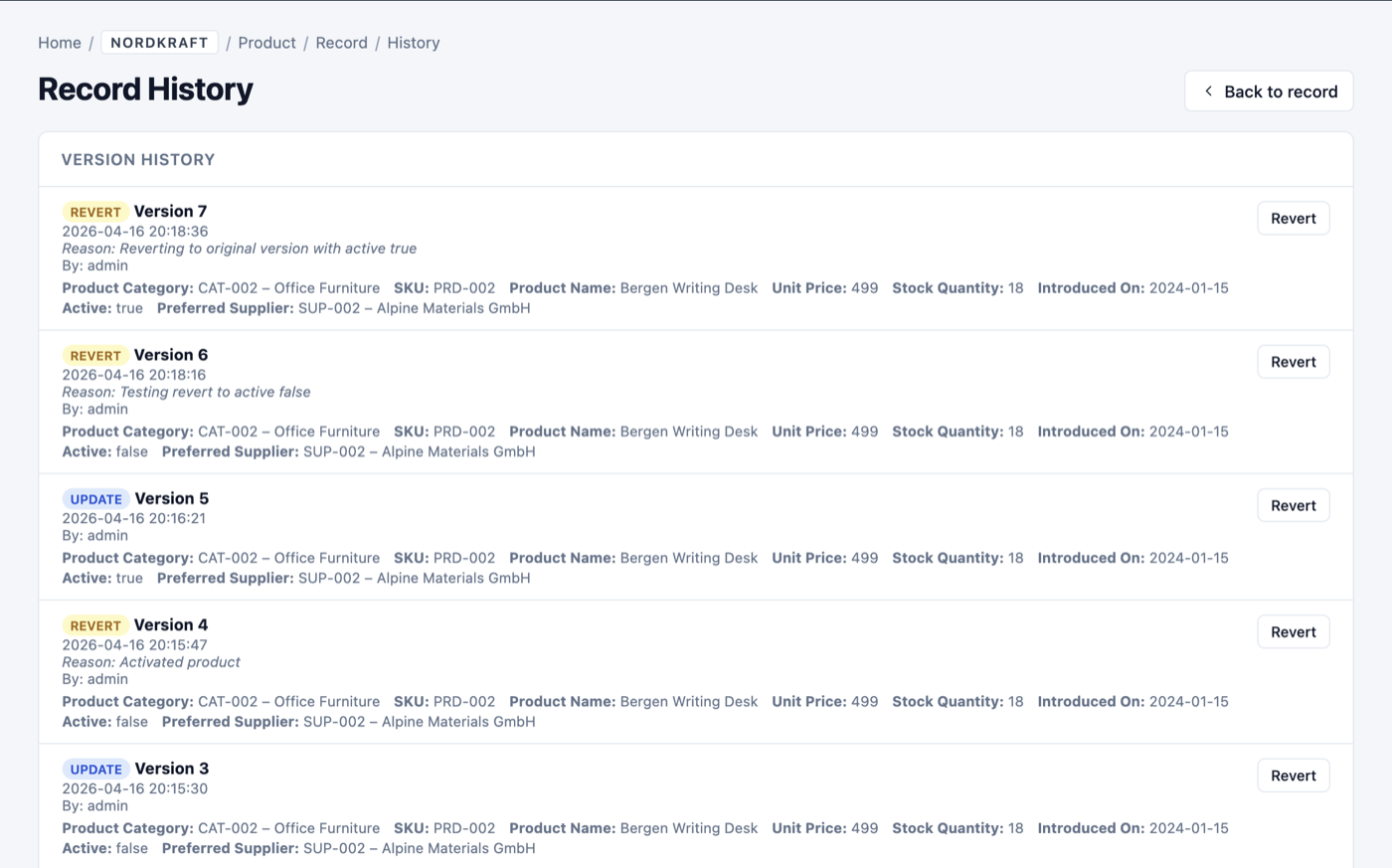
Every edit writes a new version. Browse the complete history of any record, diff what changed, and revert to any prior state — no backup tape required.
Record lifecycle management
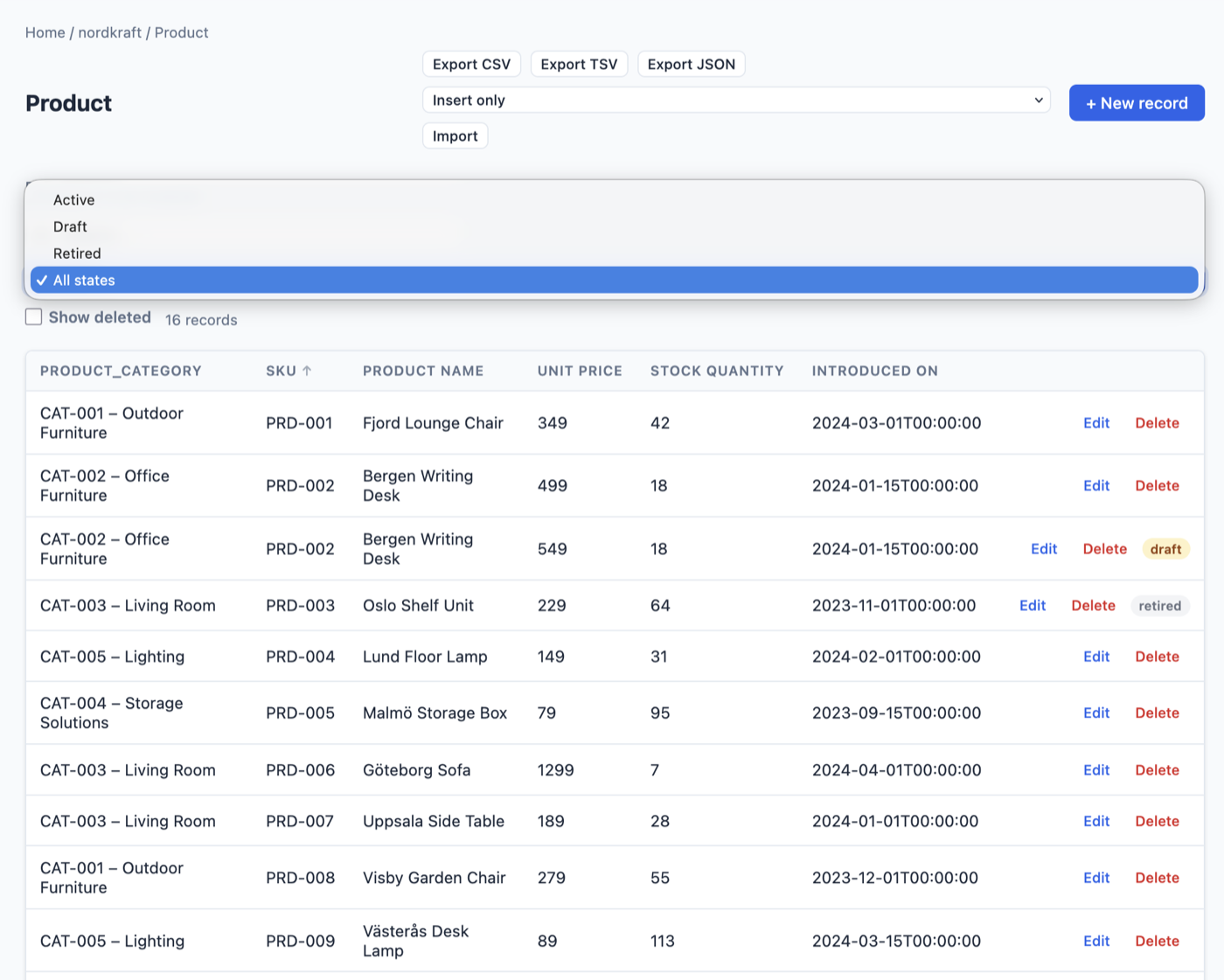
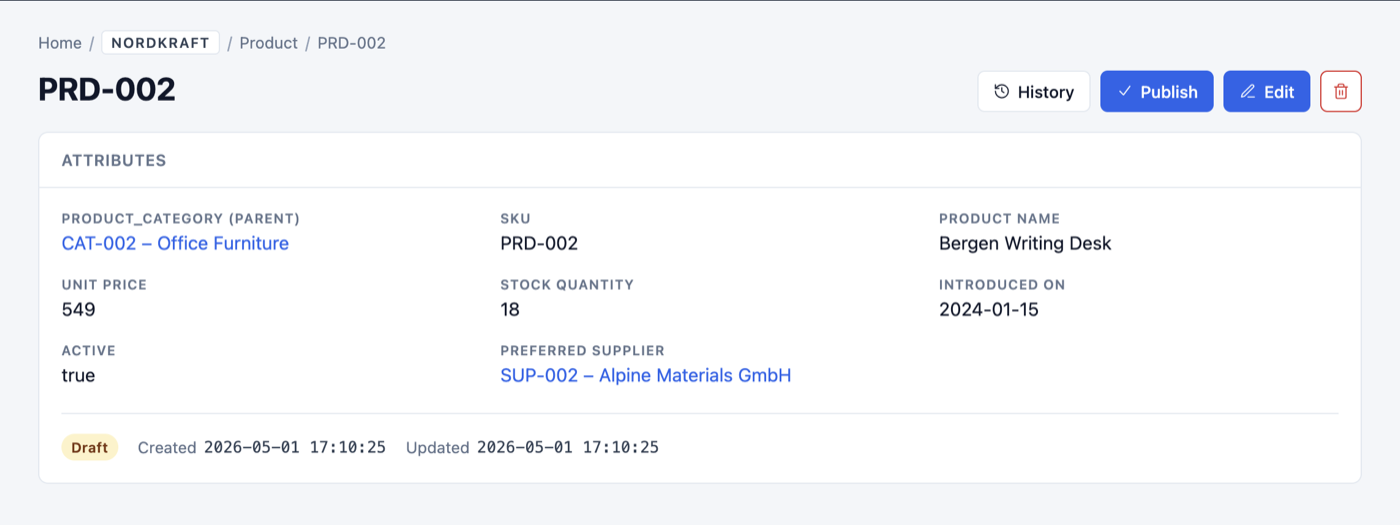
Move records through draft → active → retired states without breaking API consumers. Edits create an isolated draft copy; publishing promotes it back to the golden master record. Retired records are excluded from default API responses but never deleted. Governance rules can enforce draft review before activation, prevent retirement of stable reference data, or require explicit approval for bulk imports. Webhook callbacks fire on every transition so downstream systems stay in sync.
Source & provenance tracking
Every golden record carries its origin — which source system it came from (ERP, CRM, warehouse, or any other upstream) and its ID in that system. Provenance is captured at import or creation, preserved in every history snapshot, and filterable from both the UI and API. Know not just what your master data says, but exactly where it came from.
Inbound webhook receiver
Let upstream systems push records into miniMDM the moment they change, instead of waiting on the next scheduled import. Every inbound push lands as a draft, so nothing reaches the golden record without going through your normal review and publish flow. Incoming records are matched to existing ones automatically, with a fallback match on a business key of your choosing, and any fields you've enriched locally are left untouched by the sync.
Validation rules with a safety valve
Go beyond required fields and types with rules for value ranges, allowed characters, and conditions that depend on other fields — like an end date that must fall after its start date. A violation never blocks a save: the editor sees exactly which rules failed and can save anyway, with the override recorded in the audit log. Every record carries a valid or invalid status, visible in lists, detail views and pending drafts, while imports and inbound pushes flag problem records instead of rejecting them.
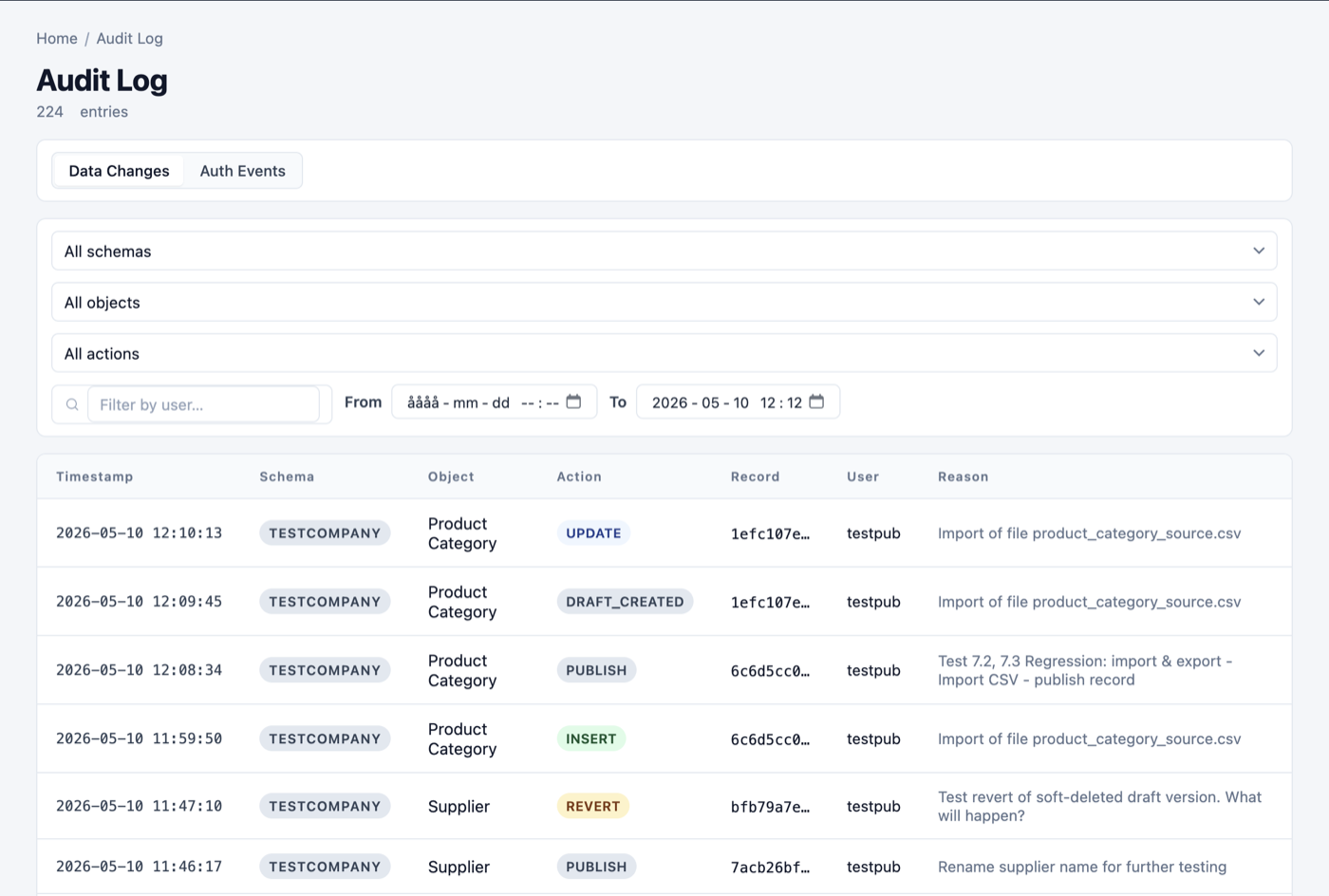
Complete audit log
What changed, who changed it, when, and why — searchable and filterable.
Role-based access
Four permission tiers — Viewer, Editor, Publisher, Admin — with per-schema grants for fine-grained control over who can read, write, or promote records. Permission changes take effect immediately, and a password change ends every session already open on that account.
Bulk import / export
CSV, TSV and JSON round-trips, with optional upsert-by-key. Exports are safe to open in Excel or Sheets.
Full-text search
Search within any object. Sortable columns and sorted dropdowns keep forms usable.
References & hierarchies
Cross-object references and parent-child relations, surfaced inline on the detail view.
Auto-generated REST API
Every object gets a documented endpoint and OpenAPI spec — automatically.